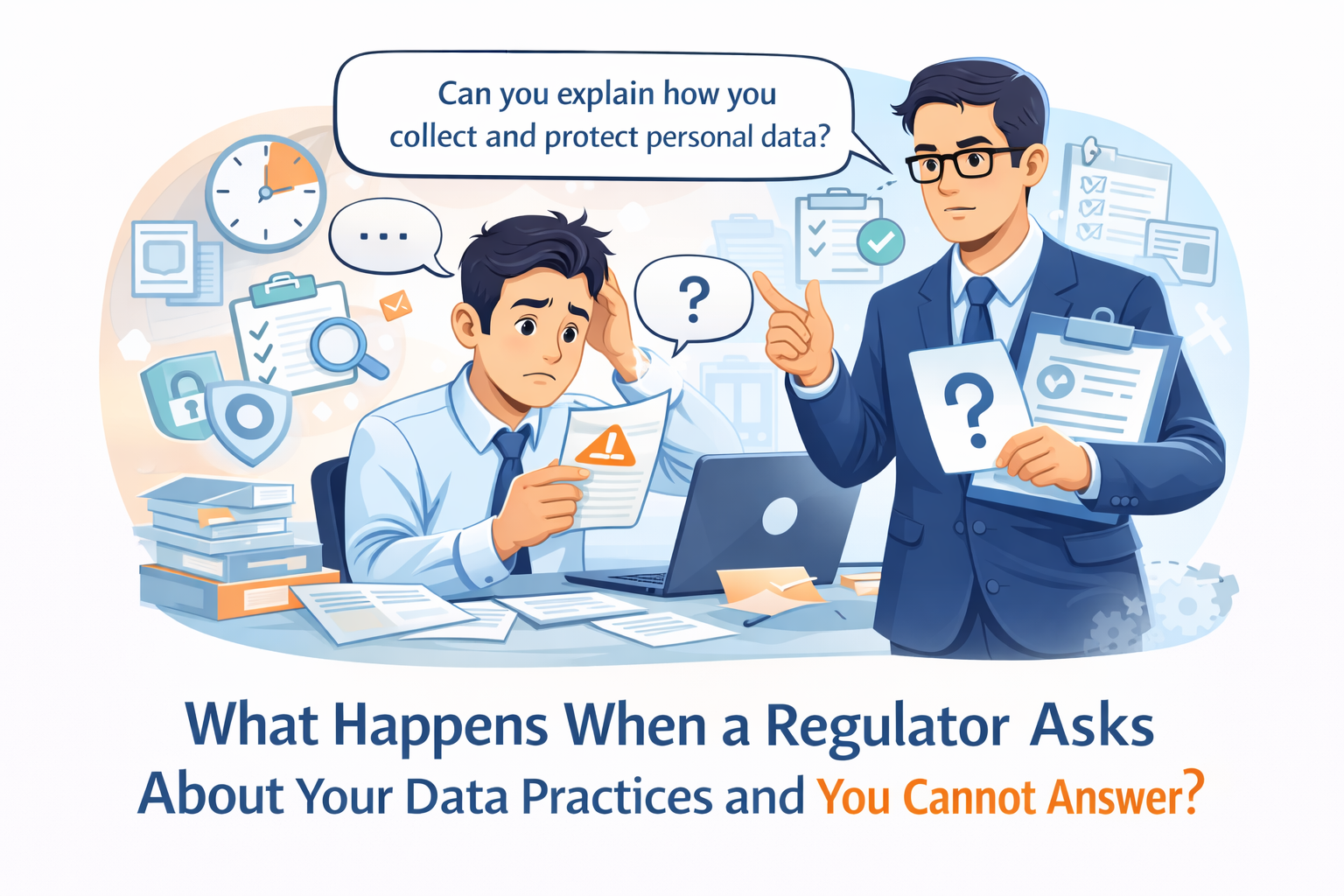
 Most organizations believe privacy compliance is mainly about preventing data breaches. They invest in firewalls, security tools, and internal policies, assuming that these measures alone are enough. While these steps are important, privacy compliance is truly tested when a regulator asks questions about how personal data is handled and protected.
Imagine being asked to explain how your organization collects, stores, and protects personal data. You may also be required to show proof of consent, demonstrate safeguards, and provide records of your data handling practices. If this information is not readily available, the situation can quickly become stressful and risky for the organization.
A real example highlights this clearly. The Romanian National Supervisory Authority for Personal Data Processing fined a company named SC Hayat Dent SRL €2,000. Interestingly, there was no data breach or cyberattack. The penalty was issued because the organization failed to properly respond to the authority during an investigation and did not provide the requested information within the required time. This shows that compliance is not only about protecting data, but also about being able to demonstrate accountability when asked.
This is especially relevant under India’s Digital Personal Data Protection Act, 2023. The law empowers authorities to review organizational practices and request information related to personal data processing. Organizations must be able to clearly explain where personal data is stored, who has access to it, how consent is managed, and what safeguards are in place. If businesses are unprepared to provide this information, they may face penalties and reputational damage.
Many organizations struggle because privacy management is often handled through manual methods such as spreadsheets, emails, and scattered documentation. Over time, these records can become outdated or incomplete, making it difficult to respond quickly and confidently to regulatory requests. This lack of readiness can create unnecessary pressure and increase compliance risks.
On the other hand, organizations that maintain structured and organized privacy practices are always prepared. They can respond to regulators confidently, reduce compliance risks, and build stronger trust with customers and partners. Being privacy ready also demonstrates professionalism and responsibility, which strengthens the organization’s overall reputation.
Preparing for privacy compliance involves maintaining proper records, managing user consent effectively, implementing safeguards, and regularly reviewing data handling practices. When these processes are in place, compliance becomes smoother and less stressful. It also allows organizations to focus on growth while ensuring responsible data management.
Privacy compliance should not be viewed as a burden, but as an opportunity to build trust and strengthen business credibility. Organizations that take proactive steps today will be more confident, resilient, and trusted in the future. Ultimately, privacy readiness is not just about meeting legal requirements. It is about creating a culture of accountability, transparency, and trust.