The Growing Concern Around Children’s Data, children today interact with digital platforms almost every day. From online classes and gaming apps to OTT platforms and social media, young users are becoming a significant part of the digital ecosystem. While these platforms offer convenience and entertainment, they also collect large amounts of personal data such as names, device information, browsing behavior, and contact details.
With the introduction of India’s Digital Personal Data Protection (DPDP) Act, protecting children’s data has become a much bigger responsibility for organizations. One specific provision of the law focuses entirely on this issue.
1. What Section 9 of the DPDP Act Requires:
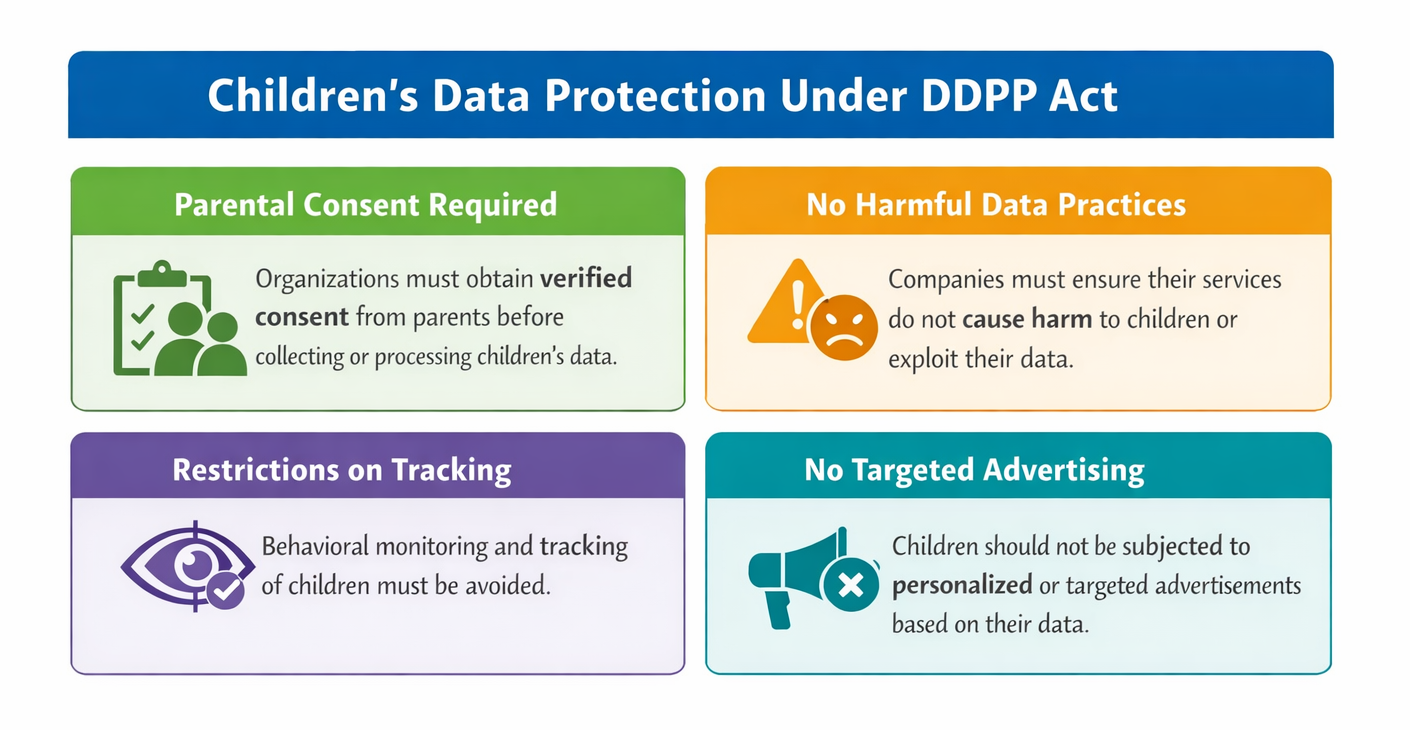
Section 9 of the DPDP Act places stricter obligations on companies when they process personal data belonging to individuals under 18 years of age.
Under this provision, organizations must:
- Obtain verifiable parental consent before processing a child’s personal data.
- Avoid activities that could potentially cause harm to children.
- Prevent tracking, behavioral monitoring, or targeted advertising directed at children.
These requirements aim to ensure that children’s online interactions remain safe and that their personal information is not misused.
2. The Reality: Are Apps Actually Ready?
While the legal requirement is clear, the current reality across many digital platforms tells a different story.
A large number of apps used in India, including EdTech platforms, gaming applications, OTT services, and even e-commerce platforms, still rely on very basic age verification mechanisms. In most cases, users are simply asked to enter their date of birth during registration. There is usually no actual system to verify whether the user is a child or an adult. Even more importantly, very few platforms have a proper parental consent workflow built into their sign-up process.
This creates a compliance gap where children may be using services that collect their data without verified parental approval.
3. Why This Is a Challenge for Businesses
Adapting these requirements is not as simple as adding a checkbox in the sign-up form. Implementing parental consent systems requires companies to rethink several parts of their digital infrastructure.
Organizations may need to introduce:
- Age verification mechanisms
- Parental approval workflows
- Changes in data collection practices
- Controls to prevent tracking or targeted advertising for minors
These changes involve technical development, policy updates, and operational adjustments.
4. A Shift Towards Responsible Digital Practices
The DPDP Act signals a broader shift in how organizations must approach privacy. Compliance is no longer just about having a privacy policy or legal documentation. It now requires systems and processes that actively protect user data, especially when it involves children.
For businesses operating in the digital space, this presents both a challenge and an opportunity. Companies that proactively build safer data practices will not only meet regulatory expectations but also earn greater trust from users and families.
Final Thought:
The DPDP Act makes one thing clear: children’s data cannot be treated like ordinary user data. As more young users interact with digital platforms; from learning apps to games and entertainment services, the responsibility to protect their personal data becomes even more important.
The question today is no longer whether children’s data should be protected.
The real question is whether organizations are prepared to protect it responsibly.
With Section 9 of the DPDP Act, simple age declarations or unchecked data collection will no longer be enough. Organizations will need to implement verified parental consent, stronger age-verification systems, and safer data practices that genuinely prioritize children’s privacy. While these requirements may appear to be a compliance challenge, they also present an opportunity. Companies that adopt privacy-first design and responsible data practices will not only meet regulatory expectations but also build something far more valuable: credibility and trust.
Because protecting children’s data is not just about following a law. It is about creating a safer digital environment where the next generation can learn, explore, and interact with confidence.